
Exercise snacks: brief, frequent bouts of activity spread throughout the day, such as 1–2 minutes of stair climbing or bodyweight training performed hourly.
Exercise Snacks
Exercise Snacks and Physical Function: Meta-Analysis
This systematic review and meta-analysis of 11 randomized trials examined exercise snacks in 472 healthy or sub-healthy adults. Brief, frequent activity bouts improved several fitness and physical-function measures, but not fatigue or BMI.
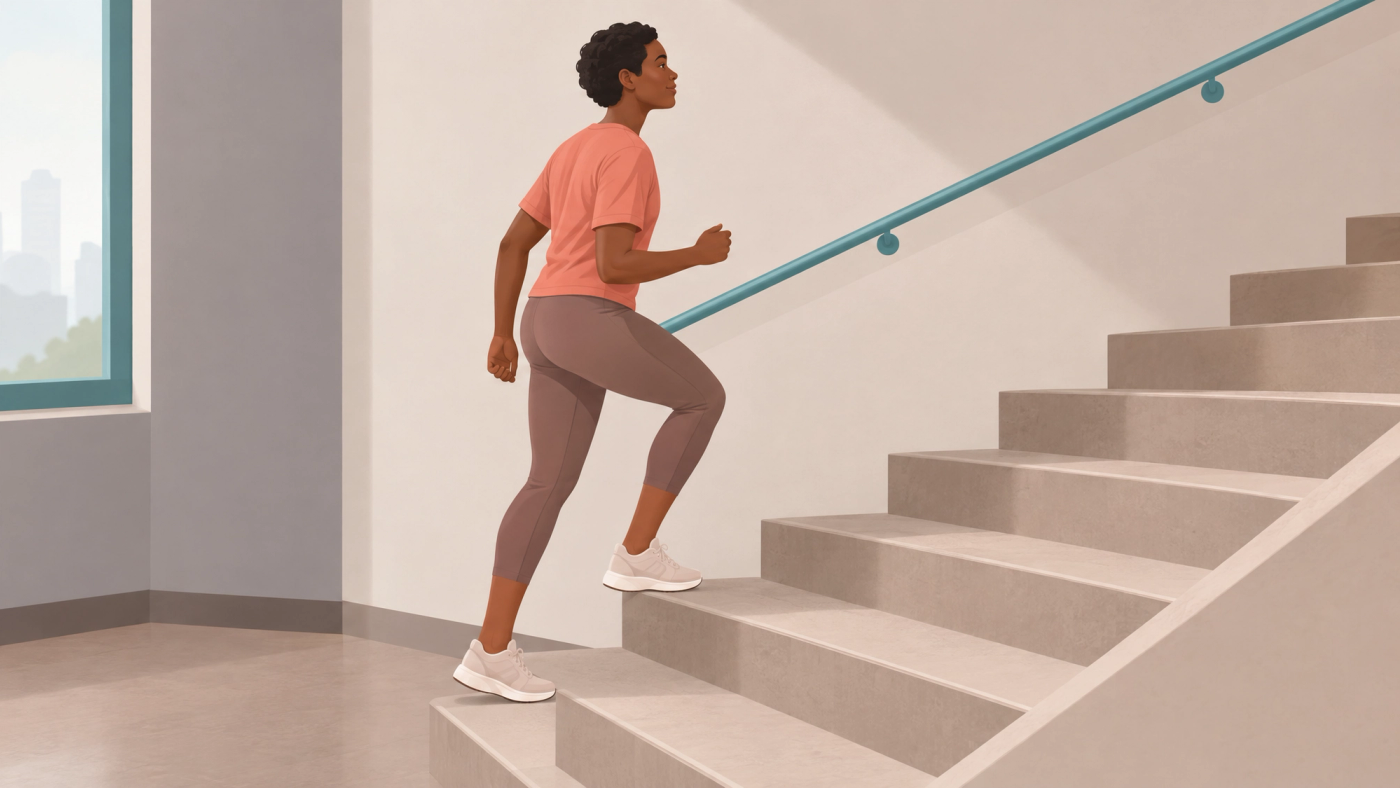
Study overview
- Study title
- Effectiveness of exercise snacks on physical function: a systematic reviews with meta-analysis of randomized controlled trials.
- Study authors
- Duo Zhang, Shu Sun, Yujiao Ding, Le Chen, Xiaotu Zhang, Jiawei Yin, Hongshi Zhang
- Population
- Healthy or sub-healthy adults
- Sample size
- 472
- Outcomes
- Peak power output, VO2max, 60-second sit-to-stand repetitions, Body fat percentage, Fatigue, BMI
Intervention
Main findings
Across 11 randomized controlled trials, exercise snacks increased absolute peak power output, maximal oxygen uptake, and 60-second sit-to-stand repetitions, while reducing body fat percentage. Differences in fatigue and BMI were not statistically significant.
What this may mean in practice
Snacksmate's reading of the evidence — not a quotation from the original paper.
Across the included randomized trials, exercise snacks improved several measures of fitness and physical function and reduced body fat percentage, while the evidence did not establish a clear effect on fatigue or BMI.
Original study
What can you take from this?
The notes above are Snacksmate’s reading of this study, not personal advice.