
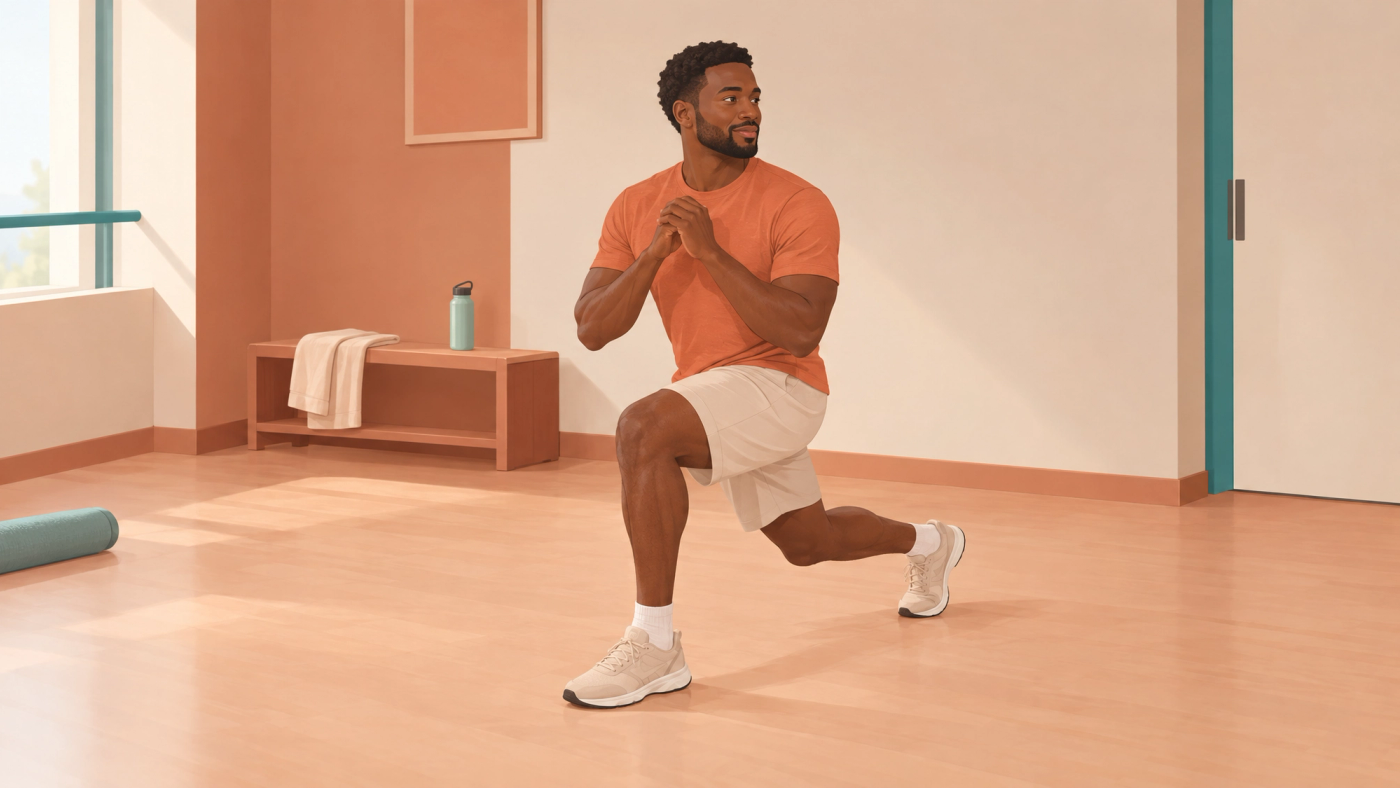
Exercise snacks consisting of three 90-second high-intensity sessions per day, 3 days weekly; the abstract also describes a daily total of 4.5 minutes.
Exercise Snacks
Exercise Snacks and Cognitive Processing in Students
A 6-week randomized trial in 89 high school students tested brief, high-intensity exercise snacks. Three 90-second sessions on three days each week were linked to faster Stroop responses and stronger prefrontal brain connectivity.
Study overview
- Study title
- Exercise Snacks Improve Cognitive Processing Efficiency: Evidence From Behavioral and fNIRS Studies.
- Study authors
- Benke Xu, Wenjun Li, Jijun Fan, Guoying Zhang, Guoxiao Sun
- Population
- High school students
- Sample size
- 89
- Duration
- 6 weeks
- Comparator
- Control group
- Outcomes
- Stroop reaction time, Stroop accuracy, Prefrontal cortex activation, Prefrontal functional connectivity
Intervention
Main findings
Compared with the control group, the exercise-snacks intervention improved reaction times for both congruent and incongruent Stroop tasks without compromising accuracy. It also increased activation in specified prefrontal regions and strengthened prefrontal functional connectivity; connectivity statistically mediated the reaction-time effect.
What this may mean in practice
Snacksmate's reading of the evidence — not a quotation from the original paper.
In high school students, this randomized trial found that six weeks of brief, high-intensity exercise snacks improved Stroop response speed and altered prefrontal activity and connectivity. It supports this school-based protocol as a promising approach for cognitive processing, but does not establish broader cognitive benefits.
Original study
What can you take from this?
The notes above are Snacksmate’s reading of this study, not personal advice.