
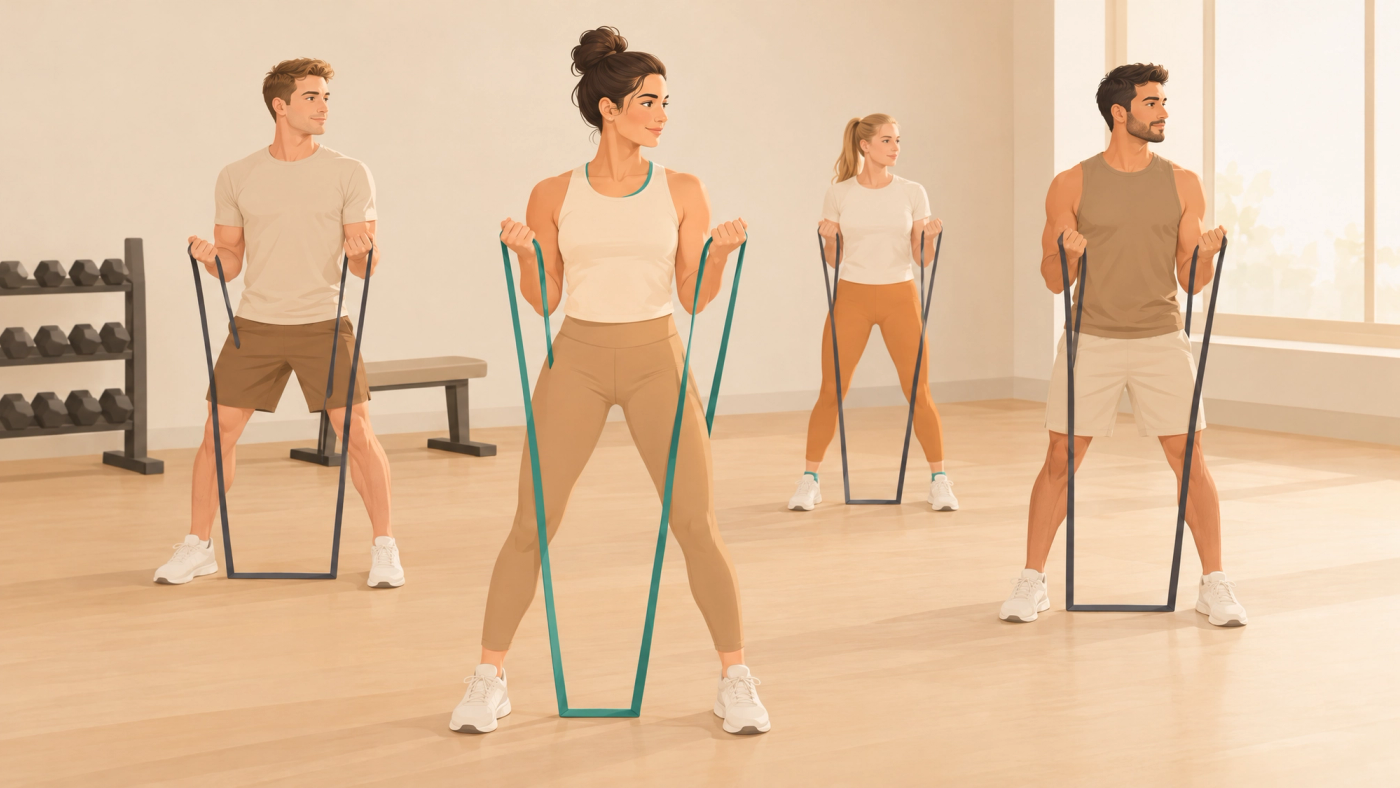
Remotely delivered bodyweight exercise snacks through an online platform; bouts were ≤1 minute, encouraged at least 3 times daily on at least 3 days per week.
Exercise Snacks
Exercise Snacks Feasibility: 12-Week Randomized Trial
A 12-week randomized trial found that remotely delivered exercise snacks were feasible and enjoyable for inactive adults, but they did not produce clearer improvements in peak oxygen uptake or cardiometabolic biomarkers than stretching.
Study overview
- Study title
- Technology-Enabled Exercise "Snacks" Are Feasible to Perform in a Real-World Setting: A Randomized Controlled Trial.
- Study authors
- Fiona J Babir, Hashim Islam, Sara McCreary, Erica Vaz, Kaja Falkenhain, Kaela Cranston, Mary Jung, Joel Singer, Roderick Sandilands, Alexis Marcotte-Chénard, Emmanuel Stamatakis, Douglas L Richards, Martin J Gibala, Jonathan P Little
- Population
- Inactive adults, 56 women and 21 men, with a mean age of 54 years
- Sample size
- 77
- Duration
- 12 weeks
- Comparator
- Stretching exercises as a placebo exercise control
- Outcomes
- Exercise adherence, Exercise enjoyment, VO2peak, Rating of perceived exertion, Cardiometabolic blood biomarkers
Intervention
Main findings
Exercise-snack and control groups exceeded the prescribed minimum adherence, with no significant difference between them. Exercise snacks produced higher perceived exertion but similar enjoyment. There were no significant between-group differences in VO2peak change or cardiometabolic blood biomarkers.
What this may mean in practice
Snacksmate's reading of the evidence — not a quotation from the original paper.
For inactive adults, remotely delivered exercise snacks appeared feasible and enjoyable over 12 weeks, but this trial did not establish a clearer improvement in aerobic capacity or cardiometabolic biomarkers than stretching exercises.
Original study
What can you take from this?
The notes above are Snacksmate’s reading of this study, not personal advice.