
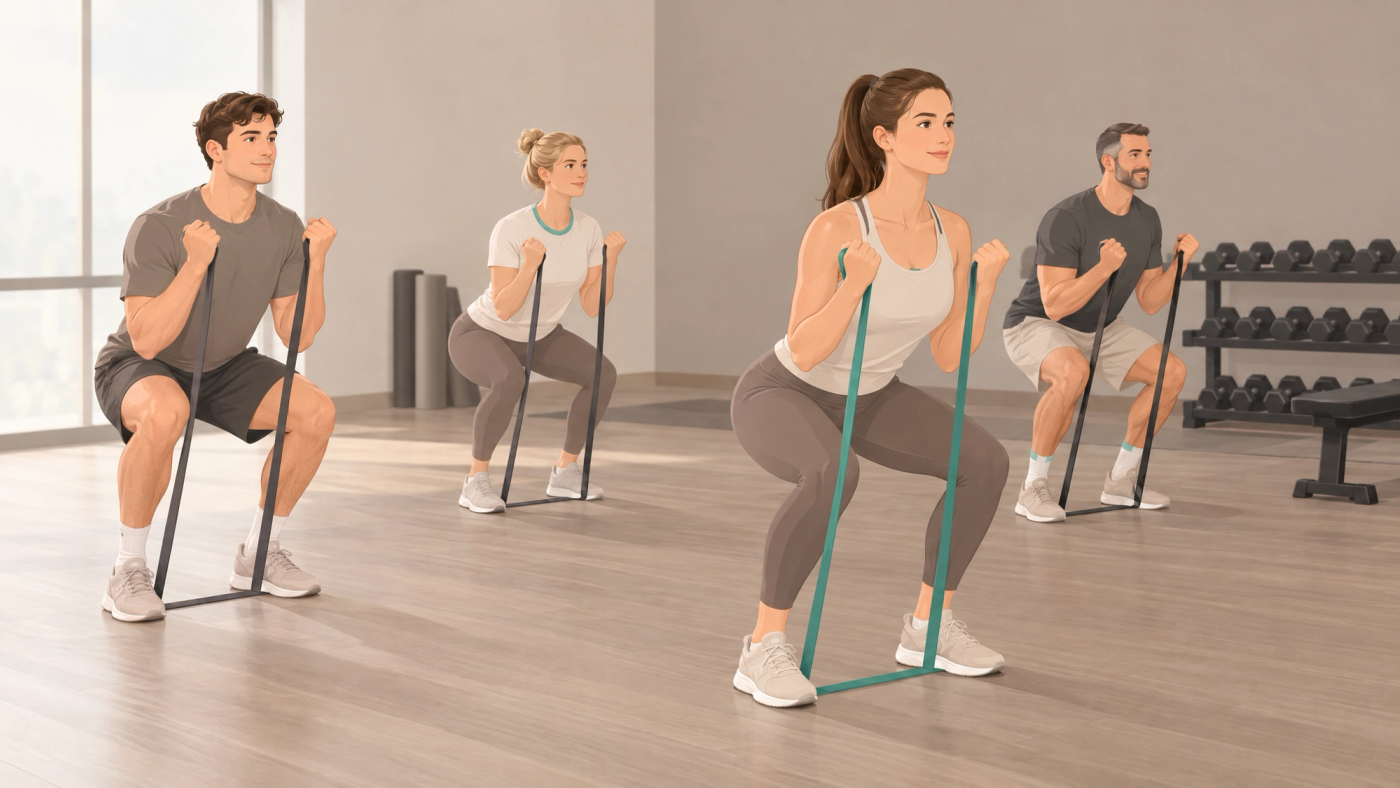
Vigorous bodyweight exercise snacks: four 1-minute bouts per day, performed on two consecutive days and guided by emailed instructional videos
Exercise Snacks
Exercise Snacks and Glucose in Type 2 Diabetes
In 31 previously inactive adults with well-controlled type 2 diabetes, four one-minute bouts of vigorous bodyweight exercise over two days improved several measures of glucose variability and reduced post-meal glucose responses versus no exercise.
Study overview
- Study title
- Exercise snacks performed in real-world settings reduce postprandial hyperglycaemia and glycaemic variability in individuals living with type 2 diabetes: a randomised crossover study.
- Study authors
- Fiona J Babir, Alexis Marcotte-Chénard, Roderick E Sandilands, Angelina D'Amico, Kaja Falkenhain, Noah Mulkewich, Hashim Islam, Douglas L Richards, Kenneth Madden, Joel Singer, Michael Riddell, Martin J Gibala, Jonathan P Little
- Population
- Previously inactive adults with well-controlled, non-insulin-treated type 2 diabetes; 21 women and 10 men, approximately 58 years old, BMI approximately 31 kg/m²
- Sample size
- 31
- Duration
- Two consecutive days; each condition was assessed over 48 hours
- Comparator
- Two consecutive days of no exercise
- Outcomes
- Mean glucose, Postprandial glucose responses, Glycaemic variability, Time in tight range
Intervention
Main findings
Compared with no exercise, exercise snacks did not significantly change mean glucose, but produced small significant improvements in several glycaemic variability measures and time in tight range. Two-hour post-meal glucose measures after breakfast and dinner were also lower.
What this may mean in practice
Snacksmate's reading of the evidence — not a quotation from the original paper.
In this small crossover study, brief vigorous exercise snacks were linked with better short-term glucose variability and lower post-meal glucose responses, but they did not establish a significant change in mean glucose.
Original study
What can you take from this?
The notes above are Snacksmate’s reading of this study, not personal advice.